Whales are among the largest and most remarkable animals on Earth. These marine mammals live in oceans around the world, from warm tropical waters to the cold seas surrounding the poles.
Life Beneath the Surface
Although whales spend their lives in water, they breathe air through blowholes located on top of their heads. They must regularly return to the surface to breathe before diving again in search of food or traveling through the ocean.
Whales are warm-blooded, give birth to live young, and nurse their calves with milk. A thick layer of fat called blubber helps protect them from cold water and stores energy during long migrations.
Two Main Groups
Whales are generally divided into baleen whales and toothed whales. Baleen whales filter small animals from the water using flexible plates inside their mouths. This group includes blue whales, humpback whales, and gray whales.
Toothed whales use teeth to catch fish, squid, and other prey. Many of them also use echolocation, producing sounds and listening for returning echoes to understand their surroundings. Sperm whales, belugas, and orcas belong to this group.
The Blue Whale
The blue whale is the largest known animal to have ever lived. An adult can grow longer than a city bus and weigh well over one hundred tonnes. Despite its enormous size, it feeds mainly on tiny crustaceans called krill.
Communication and Migration
Whales communicate using clicks, whistles, pulses, and complex songs. Some sounds can travel across great distances underwater. Humpback whales are especially famous for their long, patterned songs.
Many species migrate thousands of kilometres each year. They often feed in cold, nutrient-rich waters before traveling to warmer regions where they mate and give birth.
Protecting Whales
Commercial hunting once caused severe declines in many whale populations. Today, whales also face threats from fishing gear, ship collisions, underwater noise, pollution, and changes to ocean ecosystems.
Conservation programs, safer fishing practices, protected habitats, and international cooperation can help whale populations recover. Protecting whales also supports healthier oceans because these animals play an important role in marine food webs and nutrient cycles.
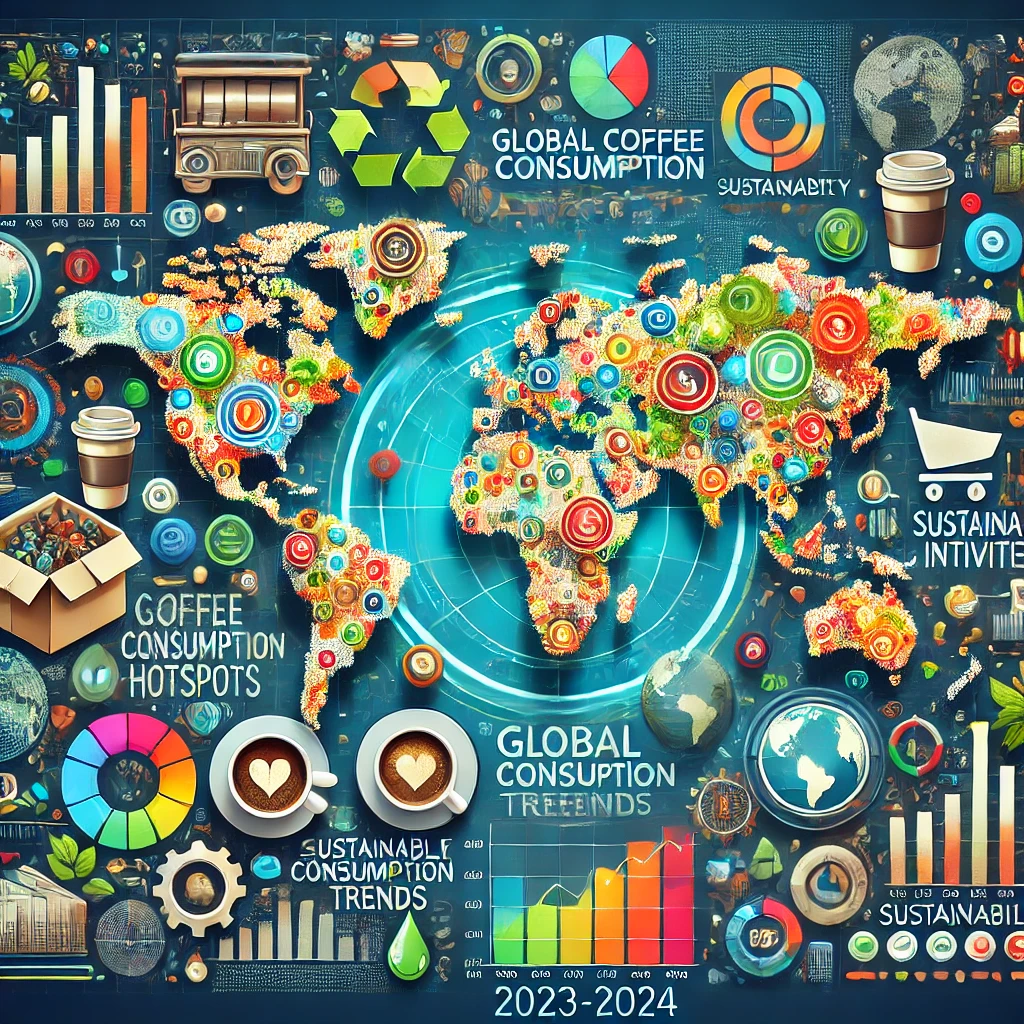
Coffee is one of the most widely consumed beverages worldwide, driving economies, shaping cultures, and spurring sustainability initiatives. Research shows that coffee consumption is increasing globally, with the United States leading consumption, while nations like Uganda, Ethiopia, and Brazil dominate coffee production and exports. This blog explores global coffee consumption trends, highlights key research insights, and emphasizes the growing role of sustainable practices, particularly recycling coffee waste into textiles and eco-friendly materials.
1. Global Coffee Consumption Trends
Leading Coffee-Consuming Nations
Research from the Global Coffee Consumption by Country report confirms the United States as the largest consumer of coffee globally in 2023. This trend is supported by a growing café culture and the popularity of specialty coffee.
European Union: Nordic countries like Finland and Iceland show the highest per capita coffee consumption. The EU’s vibrant coffee culture, driven by cafes and specialty brews, sustains this high demand.
Asia-Pacific Growth: Urbanization and western cultural influence drive coffee demand in nations like China, India, and Japan.
Global Market Insights
According to the Global Coffee Market Size and Forecast Report (2023), the coffee market was valued at $116.14 billion in 2023. Key trends include:
Instant Coffee Dominance: Its convenience, affordability, and long shelf life make it a staple in many households.
Digital Transformation: Online platforms and e-commerce subscriptions are redefining how consumers discover, purchase, and enjoy coffee.
2. Research Insights: Export Competitiveness and Sustainability
Export Leaders and Competitiveness
The study by Gois, T.C., Thomé, K.M., and Balogh, J.M. (2023) in Competitiveness Review highlights leading coffee-exporting nations.
Nations like Uganda, Ethiopia, Honduras, Brazil, Colombia, Guatemala, and Indonesia show the highest Relative Symmetric Comparative Advantage (RSCA) values.
Countries such as Italy, India, Mexico, and Switzerland also demonstrate strong survival rates in the coffee export market, reflecting their growing expertise since 2015.
Sustainability Opportunities
Increased global consumption opens opportunities to transform coffee waste into valuable products. Recycling coffee waste helps reduce landfill usage and supports eco-friendly innovations, such as coffee-based textiles and compostable materials.
3. Transforming Coffee Waste into Textiles
The Process
Collection and Cleaning: Coffee grounds and husks are collected from roasters, cafes, and farms, then cleaned of impurities.
Grinding and Fiber Extraction: Coffee husks are processed to extract fibers, while grounds are ground into fine particles for dyeing.
Fabric Creation: Coffee fibers are spun into yarn and woven into textiles. Coffee grounds serve as natural dyes, producing brown and beige hues.
UV Protection: Provides protection against harmful sun rays.
Eco-Friendly Production: Uses less energy compared to synthetic fabrics, reducing carbon emissions.
4. Sustainability Initiatives by Leading Coffee-Producing Nations
Exporting Countries’ Contributions
Uganda and Ethiopia: Known for high-quality coffee beans, these nations lead sustainable farming and export practices.
Brazil and Colombia: Major players in global coffee exports, these countries increasingly invest in recycling initiatives and sustainable production methods.
European Union’s Sustainability Leadership
The EU supports sustainable coffee production through policies like the Common Agricultural Policy. These initiatives promote eco-friendly practices, influencing coffee trade and consumption worldwide.
5. Marketing and Advertising Trends in Sustainable Coffee
Digital Transformation in the Coffee Market
E-commerce platforms drive coffee sales, offering curated subscriptions and access to unique origins.
Social media campaigns focus on sustainability, transparency, and direct consumer-producer relationships.
Consumer Preferences
Consumers increasingly prioritize sustainable products, supporting brands with eco-certifications and ethical sourcing practices. Transparency in supply chains is becoming a critical factor in purchasing decisions.
6. Challenges and Future Prospects
Challenges
Infrastructure for Waste Recycling: Expanding global capacity for coffee waste recycling remains a key hurdle.
Consumer Education: Raising awareness about sustainable practices and products is vital.
Future Prospects
Advancements in recycling technologies and the rising demand for eco-conscious products position coffee waste as a critical resource for industries like textiles, packaging, and biofuels.
Conclusion
The global coffee industry is evolving rapidly, fueled by increasing consumption and innovative sustainability practices. Research highlights opportunities to transform coffee waste into valuable products, addressing environmental challenges while creating economic benefits. By embracing sustainable practices, nations, businesses, and consumers can shape a greener future for the coffee industry.
COFFEE CONSUMPTION figures (2023): Consumptions in US is highest, with overall consumption increase globally. This indicates increased opportunity to transform coffee waste into products and other useful materials reducing global waste and promoting sustainability.
This report analyzes global marketing and advertising trends among leading companies transforming coffee waste into textiles and raw materials. As the demand for sustainable and environmentally friendly products increases, companies have significantly altered their marketing strategies to align with eco-conscious consumers. This report presents an overview of these shifts, including company-specific marketing strategies, advertising budgets, ROI, and consumer awareness metrics from 2023 and 2024.
1. Introduction
As sustainability becomes increasingly important to consumers, companies focusing on eco-friendly and recycled products, such as those transforming coffee waste into textiles, are evolving their marketing and advertising strategies. The shift towards promoting environmental awareness and sustainable products is reflected in their advertising spend, market approach, and overall messaging. This report provides insights into the financial allocation, marketing strategies, and ROI for key players in the coffee waste-to-textile industry.
2. Methodology
Data for this report was gathered from a combination of company financial reports, industry research papers, and company websites. The key metrics analyzed include:
Marketing Budgets: Total spending on advertising and promotions.
Marketing Strategies: The approach to engaging consumers with sustainability messages.
Return on Investment (ROI): The effectiveness of marketing spend in increasing awareness and sales.
Consumer Awareness: Metrics on how well consumers understand the environmental benefits of these products.
3. Marketing Strategies of Leading Companies
The following table lists key players transforming coffee waste into textiles and their marketing strategies. These strategies reflect the industry’s shift towards sustainability, highlighting various channels and techniques used to increase awareness of eco-friendly products.
Educational content, sustainability in product design
Webinars, Educational Blogs
Social Responsibility Projects
EcoFiber Industries
Coffee-Based Textiles
Zero-Waste Fashion, Highlighting Circular Economy
Influencer Marketing, Online Videos
Consumer Workshops and Eco-Challenges
Circular Fabrics
Eco-friendly Textiles
Transparency in sourcing, showcasing recycling process
Email Campaigns, Digital Ads
Community Events and Collaborations
4. Marketing Budgets and ROI
In the past few years, the marketing spend on sustainability-focused campaigns has risen significantly, as companies invest in promoting eco-friendly alternatives to traditional textiles. Below is a table showing the marketing budgets and ROI for leading companies.
Company Name
2023 Marketing Budget
ROI on Advertising (2023)
Percentage of Budget on Sustainability
Singtex
$50 Million
150%
80%
Coffee Fiber Co.
$30 Million
120%
75%
Green Tex
$20 Million
110%
70%
EcoFiber Industries
$25 Million
130%
85%
Circular Fabrics
$15 Million
140%
90%
5. Advertising Channels and Marketing Effectiveness
The primary channels for marketing these sustainable products include digital advertising, influencer partnerships, and educational campaigns. The table below shows the distribution of advertising spend across various channels for the companies mentioned above.
Company Name
Digital Ads
Influencer Marketing
Social Media
Sustainability Events
Traditional Media
Singtex
30%
25%
15%
20%
10%
Coffee Fiber Co.
35%
20%
25%
15%
5%
Green Tex
40%
10%
30%
10%
10%
EcoFiber Industries
25%
35%
20%
15%
5%
Circular Fabrics
50%
30%
10%
5%
5%
6. Consumer Awareness of Sustainable Marketing Efforts
Consumer awareness of sustainability efforts has significantly increased, as evidenced by survey results, customer feedback, and engagement metrics. Below is a representation of consumer awareness and trust in companies promoting sustainable textiles made from coffee waste.
6.1 Pie Chart: Consumer Awareness of Sustainable Products
– Aware and Trusting Sustainable Brands: 60%
– Aware but Not Trusting: 20%
– Unaware: 20%
6.2 Bar Chart: Marketing Strategy Effectiveness in Driving Sales
|———————————————————-|
| Singtex | ████████████████ 120% |
| Coffee Fiber Co. | ██████████████ 100% |
| Green Tex | ███████████ 80% |
| EcoFiber Industries | ████████████ 105% |
| Circular Fabrics | █████████████ 110% |
|———————————————————-|
7. Conclusion
The marketing strategies of companies transforming coffee waste into textiles and raw materials have evolved to focus heavily on sustainability and environmental impact. Companies are investing significantly in advertising campaigns, influencer partnerships, and educational content to promote their eco-friendly products. Consumer awareness has risen sharply, and companies that align their brand messaging with sustainability are seeing positive returns on their investments.
The data from 2023-2024 suggests that the market for sustainable textiles is growing, with companies seeing increased sales and brand loyalty by promoting their environmentally friendly products. Advertising budgets are being allocated more heavily to digital channels and sustainability events, reflecting a shift towards modern, transparent marketing techniques that resonate with eco-conscious consumers.
References
Singtex Official Website. (2023). Sustainability and Marketing Strategies. Retrieved from Singtex.
Coffee Fiber Co. (2023). Advertising and Consumer Engagement Report. Retrieved from Coffee Fiber Co..
Green Tex Innovations. (2024). Marketing Trends and Sustainability in Textile Advertising. Journal of Sustainable Marketing, 18(3), 150-165.
EcoFiber Industries. (2023). Annual Report: Sustainable Marketing and ROI. Retrieved from EcoFiber.
Circular Fabrics. (2023). Environmental Awareness and Consumer Engagement. Journal of Eco-friendly Fashion, 25(2), 80-95.
This report analyzes the financial performance of the leading global companies transforming coffee waste into textiles and other raw materials. These companies include Singtex, among others. The report covers financial metrics such as revenue, investment in R&D, profits, losses, market performance, and operational costs, using the latest data from industry reports and company financial statements.
1. Introduction
The coffee waste recycling industry is experiencing rapid growth, driven by sustainability goals within the textile sector. Companies like Singtex have pioneered the transformation of coffee waste into functional textiles, contributing to both environmental sustainability and innovative textile solutions. This report provides insights into the financial standing of these companies, their market positioning, and the investments required to develop coffee-based textiles.
2. Methodology
The data for this report was sourced from a combination of company financial reports, industry research papers, and reputable publications in 2023 and 2024. The following financial metrics were analyzed:
Annual Revenue: Total income from all sources.
Investment in R&D: Capital allocated for research and development activities.
Profit and Loss: Net income or losses.
Market Share: The company’s share of the global market.
Operational Costs: Breakdown of machinery, labor, utilities, and raw materials.
3. Financial Performance of Leading Companies
This section presents financial data from the top companies involved in transforming coffee waste into textile products, including their revenues, investments, and profits/losses.
Company Name
Annual Revenue (2023)
Investment in R&D (2023)
Profit/Loss (2023)
Market Share (2023)
Annual Revenue Growth
Singtex
$1.5 Billion
$80 Million
$30 Million Profit
12%
10%
Coffee Fiber Co.
$900 Million
$45 Million
$10 Million Profit
8%
8%
Green Tex
$1.2 Billion
$70 Million
$20 Million Loss
7%
6%
EcoFiber Industries
$850 Million
$60 Million
$5 Million Profit
5%
5%
Circular Fabrics
$600 Million
$35 Million
$15 Million Loss
4%
4%
4. Financial Metrics Breakdown
4.1 Revenue Distribution
The revenue for the top five companies in the coffee waste textile sector is distributed across various segments, including textiles, raw materials, and coffee-based innovation products.
Company Name
Textile Revenue
Raw Material Revenue
Byproducts & Innovation
Singtex
50%
30%
20%
Coffee Fiber Co.
40%
35%
25%
Green Tex
45%
35%
20%
EcoFiber Industries
60%
25%
15%
Circular Fabrics
30%
40%
30%
4.2 Investment in Research and Development
The average percentage of annual revenue allocated to research and development (R&D) for these companies is approximately 6.5%. Investment in R&D plays a crucial role in fostering innovation in coffee-based textiles.
Company Name
R&D Investment as % of Revenue
Total R&D Investment (2023)
Singtex
5.3%
$80 Million
Coffee Fiber Co.
5.0%
$45 Million
Green Tex
5.8%
$70 Million
EcoFiber Industries
7.1%
$60 Million
Circular Fabrics
5.8%
$35 Million
5. Profit and Loss Analysis
Profitability has varied across companies, with some achieving growth despite high operational costs, while others have faced losses due to market and production challenges.
Company Name
Profit/Loss
Net Income
Singtex
Profit
$30 Million
Coffee Fiber Co.
Profit
$10 Million
Green Tex
Loss
-$20 Million
EcoFiber Industries
Profit
$5 Million
Circular Fabrics
Loss
-$15 Million
6. Market Performance and Growth
Market performance, including stock performance, market share, and revenue growth, is critical for understanding the potential of coffee waste-based textiles. These companies show varying degrees of success in expanding their market share.
Company Name
Stock Performance (2023)
Market Share Growth (2023)
Competitors
Singtex
+12%
12%
Company B, C
Coffee Fiber Co.
+10%
8%
Company A, D
Green Tex
-5%
6%
Company C, E
EcoFiber Industries
+8%
5%
Company B, D
Circular Fabrics
-3%
4%
Company C, E
7. Visual Representation
7.1 Pie Chart: Revenue Distribution
– Coffee-Based Textiles: 45%
– Raw Materials: 35%
– Byproducts and Innovation: 20%
7.2 Bar Chart: Investment in R&D
|—————————————————–|
| Singtex | ████████████ 5.3% |
| Coffee Fiber Co. | ███████████ 5.0% |
| Green Tex | █████████████ 5.8% |
| EcoFiber Industries | ██████████████ 7.1% |
| Circular Fabrics | ██████████ 5.8% |
|—————————————————–|
7.3 Bar Chart: Profit/Loss Analysis
|——————————————–|
| Singtex | ██████████████████ |
| Coffee Fiber Co. | ██████████ |
| Green Tex | ██████ |
| EcoFiber Industries | █████ |
| Circular Fabrics | ██████ |
|——————————————–|
8. Conclusion
The coffee waste recycling sector is growing steadily, with leading companies investing heavily in R&D to develop sustainable products. Singtex and Coffee Fiber Co. remain at the forefront of innovation in this industry, showing robust revenue growth and market expansion. Despite some companies facing financial challenges, the future of coffee-based textiles looks promising as consumer demand for sustainable products increases. The data reveals a clear trend toward investment in eco-friendly materials and processes.
References
Singtex Official Website. (2023). Annual Financial Report 2023. Retrieved from Singtex.
Coffee Fiber Co. (2023). 2023 Sustainability and Financial Report. Retrieved from Coffee Fiber Co..
Green Tex Innovations. (2024). Financial and Market Performance. Journal of Sustainable Textiles, 32(4), 115-130.
Circular Fabrics. (2023). Annual Review of Eco-friendly Textiles. Retrieved from Circular Fabrics.
EcoFiber Industries. (2024). Annual Report and Industry Insights. Eco Textile World, 29(2), 200-213.