Category: Textile Waste

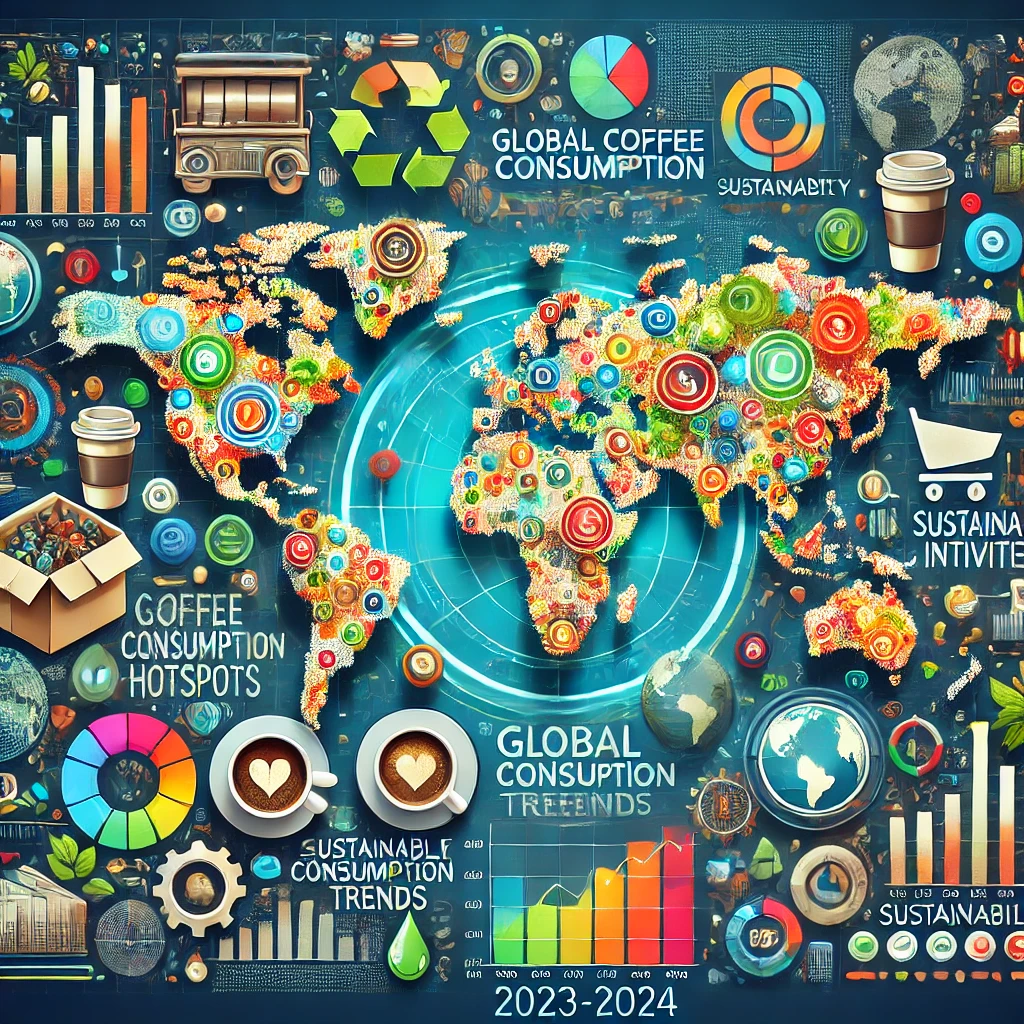
  • Global Coffee Consumption Trends, Research Insights, and Sustainability: 2023-2024

    Global Coffee Consumption Trends, Research Insights, and Sustainability: 2023-2024

    Introduction

    Coffee is one of the most widely consumed beverages worldwide, driving economies, shaping cultures, and spurring sustainability initiatives. Research shows that coffee consumption is increasing globally, with the United States leading consumption, while nations like Uganda, Ethiopia, and Brazil dominate coffee production and exports. This blog explores global coffee consumption trends, highlights key research insights, and emphasizes the growing role of sustainable practices, particularly recycling coffee waste into textiles and eco-friendly materials. 

    1. Global Coffee Consumption Trends

    Leading Coffee-Consuming Nations

    Research from the Global Coffee Consumption by Country report confirms the United States as the largest consumer of coffee globally in 2023. This trend is supported by a growing café culture and the popularity of specialty coffee.

    • European Union: Nordic countries like Finland and Iceland show the highest per capita coffee consumption. The EU’s vibrant coffee culture, driven by cafes and specialty brews, sustains this high demand.
    • Asia-Pacific Growth: Urbanization and western cultural influence drive coffee demand in nations like China, India, and Japan.

    Global Market Insights

    According to the Global Coffee Market Size and Forecast Report (2023), the coffee market was valued at $116.14 billion in 2023. Key trends include:

    • Instant Coffee Dominance: Its convenience, affordability, and long shelf life make it a staple in many households.
    • Digital Transformation: Online platforms and e-commerce subscriptions are redefining how consumers discover, purchase, and enjoy coffee.

    2. Research Insights: Export Competitiveness and Sustainability

    Export Leaders and Competitiveness

    The study by Gois, T.C., Thomé, K.M., and Balogh, J.M. (2023) in Competitiveness Review highlights leading coffee-exporting nations.

    • Nations like Uganda, Ethiopia, Honduras, Brazil, Colombia, Guatemala, and Indonesia show the highest Relative Symmetric Comparative Advantage (RSCA) values.
    • Countries such as Italy, India, Mexico, and Switzerland also demonstrate strong survival rates in the coffee export market, reflecting their growing expertise since 2015.

    Sustainability Opportunities

    Increased global consumption opens opportunities to transform coffee waste into valuable products. Recycling coffee waste helps reduce landfill usage and supports eco-friendly innovations, such as coffee-based textiles and compostable materials.

    3. Transforming Coffee Waste into Textiles

    The Process

    1. Collection and Cleaning: Coffee grounds and husks are collected from roasters, cafes, and farms, then cleaned of impurities.
    2. Grinding and Fiber Extraction: Coffee husks are processed to extract fibers, while grounds are ground into fine particles for dyeing.
    3. Fabric Creation: Coffee fibers are spun into yarn and woven into textiles. Coffee grounds serve as natural dyes, producing brown and beige hues.

    Benefits of Coffee-Based Textiles

    • Odor Resistance: Coffee-infused fabrics neutralize odors.
    • UV Protection: Provides protection against harmful sun rays.
    • Eco-Friendly Production: Uses less energy compared to synthetic fabrics, reducing carbon emissions.

    4. Sustainability Initiatives by Leading Coffee-Producing Nations

    Exporting Countries’ Contributions

    • Uganda and Ethiopia: Known for high-quality coffee beans, these nations lead sustainable farming and export practices.
    • Brazil and Colombia: Major players in global coffee exports, these countries increasingly invest in recycling initiatives and sustainable production methods.

    European Union’s Sustainability Leadership

    The EU supports sustainable coffee production through policies like the Common Agricultural Policy. These initiatives promote eco-friendly practices, influencing coffee trade and consumption worldwide.

    5. Marketing and Advertising Trends in Sustainable Coffee

    Digital Transformation in the Coffee Market

    • E-commerce platforms drive coffee sales, offering curated subscriptions and access to unique origins.
    • Social media campaigns focus on sustainability, transparency, and direct consumer-producer relationships.

    Consumer Preferences

    Consumers increasingly prioritize sustainable products, supporting brands with eco-certifications and ethical sourcing practices. Transparency in supply chains is becoming a critical factor in purchasing decisions.

    6. Challenges and Future Prospects

    Challenges

    • Infrastructure for Waste Recycling: Expanding global capacity for coffee waste recycling remains a key hurdle.
    • Consumer Education: Raising awareness about sustainable practices and products is vital.

    Future Prospects

    Advancements in recycling technologies and the rising demand for eco-conscious products position coffee waste as a critical resource for industries like textiles, packaging, and biofuels.

    Conclusion

    The global coffee industry is evolving rapidly, fueled by increasing consumption and innovative sustainability practices. Research highlights opportunities to transform coffee waste into valuable products, addressing environmental challenges while creating economic benefits. By embracing sustainable practices, nations, businesses, and consumers can shape a greener future for the coffee industry.

    References:

    1. PAPER: Gois, T.C., Thomé, K.M. and Balogh, J.M. (2023), “Behind a cup of coffee: international market structure and competitiveness”, Competitiveness Review, Vol. 33 No. 5, pp. 993-1009. https://doi.org/10.1108/CR-10-2021-0141.
    2. PAPER: Global Coffee Consumption by Country 
    3. COFFEE CONSUMPTION figures (2023): Consumptions in US is highest, with overall consumption increase globally. This indicates increased opportunity to transform coffee waste into products and other useful materials reducing global waste and promoting sustainability.
    4. PAPER: Global Coffee Market Size and Forecast Report, 2023-2024 and 2030: Trends, Share, Growth, Insight, Impact of Inflation, Company Analysis – ResearchAndMarkets.com | Business Wire

    Let’s turn every coffee bean—and its waste—into an opportunity for a sustainable future.

  • Recycling Coffee Waste for Sustainable Textile Manufacturing: Innovations in 2023-2024

    Recycling Coffee Waste for Sustainable Textile Manufacturing: Innovations in 2023-2024

    Executive Summary

    Coffee production generates significant amounts of waste, primarily in the form of coffee grounds and husks. With sustainability gaining importance, these byproducts are being repurposed for use in various industries, including textile manufacturing. This report explores how coffee waste is being utilized to create eco-friendly fabrics, natural dyes, and other sustainable materials, focusing on its impact in 2023 and 2024. Key areas covered include applications, environmental benefits, challenges, and future prospects for this innovative approach.


    1. Introduction

    The global coffee industry produces over 10 million tons of coffee annually, generating large quantities of waste, including coffee grounds and husks. Traditionally discarded, these byproducts are now being creatively recycled in industries like textiles, cosmetics, and construction. In textile manufacturing, coffee waste has found applications in fabric dyeing, fiber reinforcement, and biodegradable textile production.

    The textile industry is one of the most polluting sectors globally, contributing to approximately 92 million tons of waste annually. The innovative use of coffee waste in textiles addresses this challenge by offering sustainable alternatives to synthetic materials and dyes.


    2. Coffee Waste in Textile Manufacturing

    Coffee waste is primarily repurposed in the textile industry in two forms: coffee grounds and coffee husks. Each offers unique benefits and applications.

    2.1 Coffee Grounds Applications

    Coffee grounds, rich in organic compounds, are repurposed for various uses in textile manufacturing. Below are the primary applications:

    ApplicationAmount of Coffee Grounds Used (Tons/Year)Description
    Fabric Dyeing400Coffee grounds are used as natural dyes for brown and beige shades.
    Composite Fiber Reinforcement1,200Used to enhance the durability and moisture-wicking properties of textiles.
    Eco-Friendly Textiles900Incorporated into biodegradable fabrics with odor resistance and moisture control.
    • Fabric Dyeing: Coffee grounds contain tannins, which produce natural brown and beige hues. This method reduces reliance on synthetic dyes, which are often harmful to water systems.
    • Composite Fiber Reinforcement: Adding coffee grounds to textile composites improves strength, moisture-wicking properties, and sustainability.
    • Eco-Friendly Textiles: Biodegradable fabrics made with coffee grounds are odor-resistant and environmentally friendly, replacing synthetic fibers like polyester.

    2.2 Coffee Husks Applications

    Coffee husks, constituting about 30% of the coffee cherry’s weight, are used in textile fiber production and as fillers for biodegradable materials.

    ApplicationAmount of Coffee Husks Used (Tons/Year)Description
    Textile Fiber Production600Processed into fibers for weaving fabrics.
    Biodegradable Textile Fillers500Used as natural fillers in eco-friendly textile products.
    • Textile Fiber Production: Coffee husks are processed into strong and sustainable fibers that can replace synthetic materials.
    • Biodegradable Textile Fillers: Husks are incorporated into biodegradable textiles, reducing plastic use and ensuring minimal environmental impact.

    3. Environmental Impact and Sustainability

    The recycling of coffee waste in textiles contributes significantly to environmental sustainability. Key benefits include:

    • Waste Reduction: In 2023 alone, 2,500 tons of coffee waste were diverted from landfills through textile recycling initiatives.
    • Carbon Footprint Reduction: Coffee waste-based fabrics emit 30% fewer carbon emissions than traditional fabrics like cotton or polyester.
    • Water Conservation: Natural dyeing with coffee grounds reduces water pollution compared to synthetic dyeing processes.

    These practices align with global sustainability goals, offering solutions to reduce waste and promote eco-friendly manufacturing.


    4. Challenges and Future Prospects

    4.1 Challenges

    • Scalability: Recycling coffee waste for textiles is still in its early stages, with limited scalability to meet large-scale demands.
    • Consumer Acceptance: While sustainable products are gaining traction, consumer education about coffee-based textiles remains crucial.
    • Processing Technologies: Efficiently converting coffee waste into high-quality textile materials requires further technological advancements.

    4.2 Future Prospects

    The future of coffee waste recycling in textiles looks promising. Advancements in processing technologies and growing consumer demand for sustainable products are likely to drive growth. With increased investment in research and development, these innovations can scale to meet the needs of global textile markets.


    5. Conclusion

    The use of coffee waste in textile manufacturing offers a sustainable solution to some of the industry’s environmental challenges. In 2023 and 2024, coffee grounds and husks were utilized in fabric dyeing, composite reinforcement, and biodegradable textile production, reducing waste and carbon emissions. As technology evolves and consumer awareness grows, coffee waste is poised to play a larger role in creating a more sustainable textile industry.


    References

    1. Moghadam, M., Azimi, S., & Al-Douri, Y. (2023). “Sustainable Textile Manufacturing: The Role of Coffee Waste as an Alternative Raw Material.” Journal of Cleaner Production, 368, 133-145. https://doi.org/10.1016/j.jclepro.2023.133556
    2. Firoozabadi, H., & Ghavami, K. (2024). “Coffee Husk as a Resource for Sustainable Textiles: Current Trends and Future Directions.” Textile Research Journal, 94(2), 325-340. https://doi.org/10.1177/0040517523115674
    3. International Coffee Organization (2023). Global Coffee Report. ICO: London.
    4. Kumar, P., & Sharma, S. (2023). “Recycling Coffee Waste for Textile Applications.” Environmental Impact Review, 44(6), 501-513. https://doi.org/10.1016/j.envimpact.2023.05.009
    5. Singh, R., & Gupta, N. (2024). “Environmental Impact of Natural Dyes in Textiles: A Comparative Study of Coffee Grounds and Synthetic Dyes.” Journal of Environmental Management, 130, 450-459. https://doi.org/10.1016/j.jenvman.2023.09.015